
Top Steel Stair Manufacturers & Fabricators in the Ohio Valley » Commercial Steel Staircases » Steel Stair Tread Types
Steel Stair Tread Types
The tread decides more of a stair project than its size suggests. It determines whether a second trade has to come back to pour concrete after erection, whether the stair sheds water and slush in February, and whether the walking surface still grips after five years of boots and salt.
Four tread types cover nearly all commercial and industrial steel stairs built across Kentucky, Indiana, and Ohio. They differ less in strength than in installation sequence, drainage, and long-term maintenance.
The Four Tread Types Used in Commercial Steel Stairs
Concrete-Filled Pan Treads
A formed steel pan is welded or bolted to the stringers and filled on site with concrete after the stair is erected. The finished surface matches adjacent concrete floors, feels solid, and is quieter under foot traffic than a metal surface, which is why it is common on interior stairs in offices, hotels, and apartment buildings.
That finish comes with a scheduling dependency. A concrete crew has to return to the stair after erection, and the pour has to cure before heavy traffic. Until then the stair is structurally complete but not finished, which matters when the stair is also the construction access route.
Bar Grating Treads
Welded or pressure-locked bars form an open surface that water, snow, and debris pass straight through. The open construction reduces pooling at the nosing, limits the need to clear accumulated water and snow, and a serrated bar profile adds grip without a coating that can wear off.
The open surface is also the limitation. Debris falls to whatever sits below the stair, so grating may be a poor choice directly above a walkway, a work area, or stored product. Grating is commonly used for exterior stairs, stair towers, and plant interiors where drainage is more important than appearance.
Checker Plate Treads
Also called diamond plate, this is solid steel plate with a raised pattern rolled into the surface. It arrives finished, needs no pour, and gives a closed walking surface that keeps debris out of the space below.
The raised pattern provides traction when dry. Wet, oily, or icy conditions reduce it, so an abrasive nosing or grit coating is worth specifying for checker plate stairs that see weather or process fluids.
Flat Plate Treads
Smooth steel plate gives the cleanest visual line of the four and suits exposed architectural stairs where the tread edge is part of the design. Because the surface carries no pattern, slip resistance has to come from an added abrasive nosing, a grit-embedded coating, or an applied non-slip tread cover.
A Note on Precast Concrete Treads
Precast concrete treads appear less often but offer a similar installation advantage to a filled pan without the site pour. Factory-cast units drop into the steel frame, arrive at a consistent finish, and weigh considerably more per tread, so setting them requires a lift.
Slip Resistance and What the Codes Require
Two code frameworks are in play, and they cover different buildings. OSHA governs workplace stairs and requires treads and landings to be free of hazards and slip resistant. The IBC governs stairs in buildings generally and addresses riser openings, nosing profiles, and dimensional uniformity.
Each tread type reaches slip resistance differently:
- Bar grating — serrated bar profiles, plus drainage that helps keep standing water off the surface
- Checker plate — a rolled raised pattern, with abrasive nosing added for wet or oily exposure
- Flat plate — an added abrasive nosing or grit coating, since the plate itself is smooth
- Concrete-filled pan — a broomed or textured finish on the pour, with a cast or bolted abrasive nosing
Open grating raises one more question on IBC-governed stairs. Riser openings are limited in occupancies where children are present, and an open-riser grating stair may need a closed riser or a toe plate to comply. Confirm the requirement against the code edition in force locally.
For the dimensional and surface requirements themselves, see our guide to OSHA stair tread requirements.
Drainage, Cleaning, and Winter Maintenance
Ohio Valley winters mean repeated freeze-thaw cycles and heavy de-icing salt. Both act on the tread surface first.
Grating drains, so meltwater is less likely to collect and refreeze at the nosing, reducing the amount of snow and ice crews need to clear before a shift. Solid surfaces — checker plate, flat plate, and filled pan — hold water and slush where the tread meets the nosing, which is the exact spot where a foot lands. Exterior solid-tread stairs typically require more routine shoveling and salting, and the salt can then attack whatever coating protects the steel.
Cleaning runs the other way. Grating allows water and debris to pass through, which can be a problem in food processing, loading areas, and anywhere below the stair is occupied. Solid treads collect debris but keep it contained, which is why they are often preferred for interior and food-processing areas.
Finish choice follows exposure more than tread type. Hot-dip galvanizing is commonly specified for exterior stairs in this climate, whichever tread sits in the frame.
How Tread Choice Affects the Installation Sequence
Grating, checker plate, and flat plate treads arrive finished. Once the assembly is set and bolted, the tread installation itself is complete, allowing the stair to serve as construction access without relying on a rented scaffold stair tower where the project schedule and applicable requirements permit.
Concrete-filled pan treads do not reach that point at erection. The pour is a separate trade on a separate visit, and the schedule has to hold a slot for it and for cure time before the stair takes traffic. On a project where the stair is needed early for vertical access, that gap either delays the stair or requires a temporary access solution.
Precast treads avoid the pour but add weight. Confirm lift capacity and site access before specifying them on an upper floor or a tight infill lot.
Matching the Tread to the Building Type
| Application | Typical tread | Why |
|---|---|---|
| Office, hotel, multifamily interior | Concrete-filled pan | Quiet, solid feel, finish matches adjacent floors |
| Warehouse and plant interior | Checker plate or grating | Arrives finished and suits industrial traffic |
| Exterior stairs and stair towers | Galvanized bar grating | Drains meltwater and reduces water and snow accumulation on the tread |
| Exposed architectural stairs | Flat plate with abrasive nosing | Cleanest visual line, with slip resistance added |
| Food and beverage processing | Solid tread, stainless or coated | Contains debris and suits washdown areas |
What to Confirm Before You Specify
- Which code governs the stair — OSHA, IBC, or both
- Whether the space below the stair is occupied, walked, or used for storage
- Interior or exterior exposure, and the finish that follows from it
- Whether the stair is needed as construction access before final finishes
- Who supplies and pours the concrete for pan treads, and when that slot sits in the schedule
- Whether abrasive nosings are included in the stair package or excluded
- Riser opening requirements for the occupancy, if grating is under consideration
Tread selection also moves the price. For how it sits alongside geometry, railings, and finish, see our commercial steel stair cost guide.
[Advertisement]
Find the Right Manufacturer by Stair Type
Find the Right Manufacturer by Stair Type
Compare manufacturers for egress, decorative, and industrial stair applications in the Ohio Valley.
Advertiser Disclosure:
We receive compensation from some of the companies listed below.This compensation may affect which companies are included and the order in which they appear.
For
Emergency
Egress Stairs
Emergency
Egress Stairs
SY Stairs

source : SY Stairs Official Website(https://systairs.com/)
- A fully modular design with integrated handrails eliminates the need for on-site welding or specialized labor. Compared to traditional field-assembled systems, installation is over 70%* faster, allowing follow-on trades to start work much sooner.
- Designed to meet building codes across the Ohio Valley, these stairs are ready for permanent use from day one. By eliminating the need for temporary ladders, they improve job site safety and accessibility.
| Key standards |
OSHA, AISC, AWS, etc. |
|---|---|
| Typical lead time |
6 to 8 weeks |
| CAD data | Available |
For
Decorative
Monumental Stairs
Decorative
Monumental Stairs
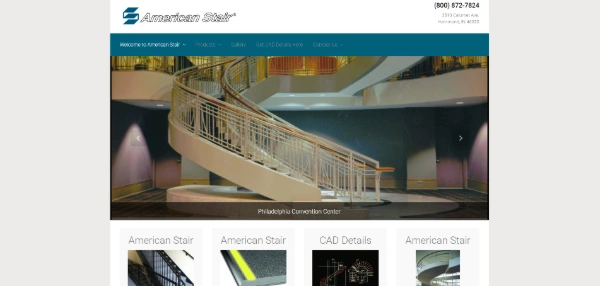
American Stair
American Stair Official Website
(https://www.americanstair.com/)
- With proprietary custom design, the company delivers complex circular, spiral, and cantilevered stairs, creating iconic staircases that become a building’s architectural focal point.
- Advanced monumental stair solutions combine steel structures with materials such as glass, wood, and stone to deliver a refined, high-end finish with lasting strength.
| Key standards |
IBC, OSHA, etc. |
|---|---|
| Typical lead time |
8 to 12 weeks |
| CAD data | Available |
For
Industrial
Dock Stairs
Industrial
Dock Stairs
Upside Innovations

Upside Innovations Official
Website(https://upsideinnovations.com/)
- Crafted from industrial-grade aluminum, these stairs resist rust even in humid loading areas and outdoor installations. That helps maintain a clean appearance and dependable structural strength for long-lasting safety.
- Bolt-on assembly means your stair can be installed in just a few hours with a forklift and a small crew, keeping your jobsite moving with minimal disruption.
| Standards | OSHA,ADA, etc. |
|---|---|
| Lead time | Contact for details |
| CAD data | Contact for details |
*Based on SY Stairs' internal comparison between its modular pre-fabricated system and traditional field-assembled (stick-built) steel stair systems.
Results may vary depending on project scale, site conditions, and crew size.
Results may vary depending on project scale, site conditions, and crew size.
*Information as of February 2, 2026