
Top Steel Stair Manufacturers & Fabricators in the Ohio Valley » Steel Stair Safety & Compliance Standards
Steel Stair Safety & Compliance Standards
Here you'll find practical guides covering OSHA and IBC stair regulations, tread requirements, prefabricated stair systems, and key compliance considerations for steel stairs used in industrial, commercial, and public facilities. Understanding the applicable codes is essential for ensuring worker safety, passing inspections, and avoiding costly project delays.
OSHA-Compliant Steel Stairs Guide
OSHA-compliant steel stairs are widely used in factories, warehouses, manufacturing plants, and industrial facilities throughout the United States. Meeting OSHA requirements is critical not only for protecting workers but also for avoiding citations, liability risks, and operational disruptions.
This guide explains the core requirements of OSHA Standard 1910.25, including stair dimensions, tread requirements, handrails, guardrails, and the benefits of prefabricated OSHA stair systems. If you are planning a new industrial stair project or evaluating an existing stairway for compliance, this article provides a comprehensive overview of the standards you need to know.
OSHA vs. IBC Stair Requirements
One of the most common challenges during stair design is determining whether OSHA regulations or International Building Code (IBC) requirements apply to a project. Although both address safety, they serve different purposes and apply in different regulatory contexts.
This article compares OSHA and IBC requirements for risers, treads, stair slopes, handrails, guardrails, and baluster spacing. It also explains how selecting the wrong requirements can increase project costs and create compliance issues. For architects, facility managers, and contractors, understanding the differences between OSHA and IBC requirements is essential for selecting an appropriate stair design.
IBC Metal Stair Code Guide
IBC-compliant metal stairs are required in many commercial buildings, public facilities, schools, healthcare environments, and mixed-use developments. Because these stairways may serve the general public, IBC requirements can be more restrictive than OSHA standards, depending on the project and applicable jurisdiction.
This guide covers key dimensions, structural requirements, handrail regulations, guardrail standards, and means-of-egress requirements that apply to IBC metal stairs. It also explains the well-known “7-11 Rule” and the 4-inch sphere rule that can affect project approvals. If your project must pass building inspections and satisfy public safety requirements, this article provides practical design guidance.
OSHA Stair Tread Requirements
Stair treads play a major role in preventing slips, trips, and falls in industrial environments. OSHA establishes specific requirements for tread depth, dimensional consistency, nosing design, and slip resistance to help protect workers from injury.
This guide explains OSHA tread requirements in detail and compares common tread materials such as diamond plate, bar grating, and perforated grip strut surfaces. It also discusses whether existing treads can be upgraded or whether replacing the entire stair system is a better long-term solution. Facilities seeking to improve safety performance and reduce fall hazards will find practical recommendations throughout this article.
Prefabricated OSHA Stairs Guide
Prefabricated OSHA stairs provide a faster and more predictable alternative to traditional field-built stair systems. Because they are engineered and manufactured in controlled factory environments, they can help reduce installation time while supporting OSHA compliance.
This article explores the advantages of bolt-together stair systems, including reduced labor costs, improved dimensional accuracy, and simplified installation. It also highlights common applications such as mezzanines, loading docks, and equipment access platforms. For projects operating under tight schedules, prefabricated OSHA stairs can offer significant advantages over on-site fabrication.
OSHA-Compliant Stairs: A Guide to Handrail and Guardrail Requirements
Stair safety design often focuses on tread dimensions and angles, but handrails, guardrail systems, and stair rail systems also play an important role in preventing falls. OSHA 1910.28 and 1910.29 define specific requirements for the height, strength, and openings of these systems.
This article clarifies the differences between handrails, guardrails, and stair rail systems and covers key dimensional requirements such as the 30–38-inch handrail height range and the 42-inch ± 3-inch guardrail top rail height. It also explains the conditions that determine when installation is required. Getting these specifications wrong at the design stage can result in a stair system that fails to meet OSHA requirements after installation.
OSHA Standards: How to Choose Between Stairs and Ladders
Choosing between stairs and fixed ladders for factory or warehouse access equipment isn't just a matter of space—it directly affects worker safety and OSHA compliance. Choosing the wrong type of access equipment can require costly corrective action after installation.
This article compares OSHA's classification standards by installation angle (30–50° for standard stairs and 60–90° for ladders) and explains when each option may be appropriate based on traffic frequency, carried loads, and fall protection requirements. It also outlines the differing safety measures, from handrails to Personal Fall Arrest Systems. For routes with frequent use or emergency egress needs, the appropriate access equipment should be selected based on the applicable OSHA requirements and the specific conditions of the facility.
Mezzanine Stairs: A Guide to OSHA and IBC Requirements
Mezzanines are a popular way to maximize floor space in warehouses and factories, but access stairs may be subject to multiple overlapping requirements, making this an area where design oversights can occur.
This article explains how OSHA 1910.25 and 1910.28 requirements for stair dimensions, handrails, and guardrails apply to mezzanine access stairs and how IBC requirements for egress routes, riser height, and tread depth can differ depending on occupancy, floor level, and jurisdiction. It also covers stair width and load capacity considerations. Because OSHA addresses workplace safety while the IBC addresses building design and egress where it has been adopted, both sets of requirements may need to be checked for a mezzanine stair project.
[Advertisement]
Find the Right Manufacturer by Stair Type
Find the Right Manufacturer by Stair Type
Compare manufacturers for egress, decorative, and industrial stair applications in the Ohio Valley.
Advertiser Disclosure:
We receive compensation from some of the companies listed below.This compensation may affect which companies are included and the order in which they appear.
For
Emergency
Egress Stairs
Emergency
Egress Stairs
SY Stairs
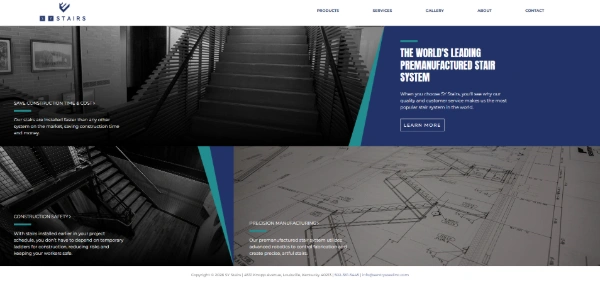
source : SY Stairs Official Website(https://systairs.com/)
- A fully modular design with integrated handrails eliminates the need for on-site welding or specialized labor. Compared to traditional field-assembled systems, installation is over 70%* faster, allowing follow-on trades to start work much sooner.
- Designed to meet building codes across the Ohio Valley, these stairs are ready for permanent use from day one. By eliminating the need for temporary ladders, they improve job site safety and accessibility.
| Key standards |
OSHA, AISC, AWS, etc. |
|---|---|
| Typical lead time |
6 to 8 weeks |
| CAD data | Available |
For
Decorative
Monumental Stairs
Decorative
Monumental Stairs
American Stair
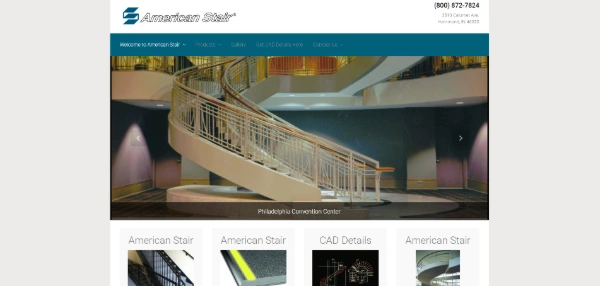
American Stair Official Website
(https://www.americanstair.com/)
- With proprietary custom design, the company delivers complex circular, spiral, and cantilevered stairs, creating iconic staircases that become a building’s architectural focal point.
- Advanced monumental stair solutions combine steel structures with materials such as glass, wood, and stone to deliver a refined, high-end finish with lasting strength.
| Key standards |
IBC, OSHA, etc. |
|---|---|
| Typical lead time |
8 to 12 weeks |
| CAD data | Available |
For
Industrial
Dock Stairs
Industrial
Dock Stairs
Upside Innovations

Upside Innovations Official
Website(https://upsideinnovations.com/)
- Crafted from industrial-grade aluminum, these stairs resist rust even in humid loading areas and outdoor installations. That helps maintain a clean appearance and dependable structural strength for long-lasting safety.
- Bolt-on assembly means your stair can be installed in just a few hours with a forklift and a small crew, keeping your jobsite moving with minimal disruption.
| Standards | OSHA,ADA, etc. |
|---|---|
| Lead time | Contact for details |
| CAD data | Contact for details |
*Based on SY Stairs' internal comparison between its modular pre-fabricated system and traditional field-assembled (stick-built) steel stair systems.
Results may vary depending on project scale, site conditions, and crew size.
Results may vary depending on project scale, site conditions, and crew size.
*Information as of February 2, 2026