
Top Steel Stair Manufacturers & Fabricators in the Ohio Valley » Steel Stair Safety & Compliance Standards » IBC Metal Stair Code: Complete Compliance Guide for Commercial Buildings
IBC Metal Stair Code: Complete Compliance Guide for Commercial Buildings
Index
IBC compliant metal stairs are essential components of commercial buildings, public facilities, educational institutions, healthcare environments, and multi-occupancy structures throughout the United States. Unlike industrial stairways governed primarily by OSHA regulations, IBC stair requirements are designed to protect the general public, including children, elderly individuals, and visitors who may have varying levels of mobility.
For architects, engineers, contractors, and property owners, understanding IBC metal stair code requirements is critical to achieving code approval, passing inspections, and ensuring long-term occupant safety. This guide covers the key dimensional, structural, and safety requirements that apply to metal stair systems under the International Building Code (IBC).
Why IBC Compliance is Critical for Metal Stairs
IBC compliance is one of the most important factors in the successful completion of a commercial construction project. Stairways serve as primary circulation routes and, in many cases, critical means of egress during emergencies.
If a stair system fails to meet IBC requirements, it may result in failed inspections, delayed occupancy permits, expensive redesigns, or additional construction costs. In some situations, non-compliant stairways can even create liability concerns if accidents occur after the building is occupied.
Beyond regulatory approval, IBC standards help ensure that building occupants can safely navigate stairways during both normal use and emergency evacuations. By establishing strict requirements for dimensions, handrails, guardrails, and structural performance, the code creates a consistent level of safety across public and commercial buildings.
Core Dimensions: IBC Tread, Riser, and Width Specs
One of the primary goals of the IBC is to create stairways that are comfortable, predictable, and safe for users of all ages. To accomplish this, the code establishes strict dimensional standards that must be followed throughout the entire stair system.
The following requirements represent some of the most frequently referenced dimensions during stair design and code review.
- Maximum riser height: 7 inches
- Minimum tread depth: 11 inches
- Handrail height: 34–38 inches
- Typical minimum egress width: 44 inches
- Minimum egress width for certain low-occupancy buildings: 36 inches
Because stair geometry is one of the first items inspectors evaluate, dimensional accuracy is critical from the earliest stages of design through final installation.
The "7-11 Rule": Riser Height and Tread Depth
Perhaps the most widely recognized IBC stair requirement is the so-called "7-11 Rule".
Under the code, stair risers generally may not exceed 7 inches in height, while treads must provide a minimum depth of 11 inches.
This requirement creates a gentle, comfortable stairway that can be safely used by a broad range of occupants. Compared with industrial stair standards, the lower riser height reduces climbing effort while the deeper tread provides a larger walking surface.
Another critical requirement involves dimensional consistency. The IBC limits variation between the tallest and shortest risers, as well as the deepest and shallowest treads, to no more than 0.375 inches.
Even a small deviation beyond this tolerance can trigger inspection failures because inconsistent stair geometry significantly increases the risk of trips and falls.
| Dimension | IBC Requirement |
|---|---|
| Maximum Riser Height | 7 inches |
| Minimum Tread Depth | 11 inches |
| Maximum Variation | 0.375 inches |
Minimum Stairway Width for Means of Egress
When a stairway serves as part of a building's means of egress, minimum width requirements become especially important.
The required width depends largely on occupant load and the function of the building. In many commercial applications, stairways serving larger occupant loads must provide a minimum clear width of 44 inches.
However, smaller buildings with lower occupancy levels may be permitted to use stairways as narrow as 36 inches under certain circumstances.
The purpose of these requirements is to ensure that building occupants can move efficiently during emergencies without creating dangerous bottlenecks.
As occupant loads increase, egress capacity becomes a major design consideration that directly influences stair width requirements.
Structural and Load Capacity Requirements
In addition to dimensional requirements, the IBC establishes structural performance standards that metal stairs must satisfy.
Engineers designing steel stair systems must account for both distributed loads and concentrated loads that may occur during daily use and emergency situations.
Common structural design requirements include:
- Live load requirements commonly based on 100 pounds per square foot (psf)
- Concentrated loads of approximately 300 pounds applied at critical locations
- Appropriate structural deflection limits
- Load transfer into supporting building structures
- Long-term durability and stability considerations
These requirements help ensure that metal stair systems maintain structural integrity even under heavy occupant traffic and emergency evacuation conditions.
For this reason, IBC stair systems should always be supported by engineering calculations and detailed fabrication drawings that demonstrate compliance with applicable loading criteria.
Handrail and Guardrail Regulations Under IBC
Handrails and guardrails are among the most frequently inspected components of any stairway. Even when stair dimensions are correct, deficiencies in railing design can prevent a project from receiving final approval.
The IBC includes detailed requirements regarding handrail height, graspability, guardrail configuration, and opening limitations.
Handrail Height and Graspability
Handrails provide stability and support for users ascending and descending stairs. To maximize effectiveness, the IBC specifies both height and graspability requirements.
- Typical handrail height: 34 to 38 inches above the stair nosing
- Handrails must be continuous for the length of the stair flight
- Certain circular handrails must maintain approved diameter ranges for proper gripping
- Handrails must allow users to firmly grasp the rail during movement
These requirements help ensure that occupants can maintain balance and recover safely if they stumble while using the stairway.
A handrail that is difficult to grasp may be considered non-compliant even if it is installed at the correct height.
The 4-Inch Sphere Rule for Guardrails
One of the most important and widely recognized guardrail requirements within the IBC is the "4-inch sphere rule."
This rule states that openings within guardrails generally must be small enough that a 4-inch diameter sphere cannot pass through.

Illustration: Example of the IBC 4-inch sphere rule for guardrail openings
The purpose of this requirement is to prevent young children from slipping through guardrails or becoming trapped between balusters.
Because the rule applies to most occupied commercial and public spaces, designers must carefully consider baluster spacing during both the design and fabrication phases.
Guardrail systems that fail the 4-inch sphere test are among the most common reasons for correction notices during final inspections.
Advantages of Prefabricated IBC Compliant Metal Stairs
Many developers and contractors choose prefabricated metal stair systems because they provide a more predictable path to code compliance.
Rather than relying on extensive field welding and site fabrication, prefabricated stairs are manufactured in controlled factory environments using precise engineering and quality control procedures.
This approach offers several advantages:
- Improved dimensional accuracy
- Consistent code compliance
- Reduced installation time
- Lower risk of field measurement errors
- Faster project completion
- Reduced likelihood of inspection failures
Because critical dimensions such as tread depth, riser height, handrail placement, and guardrail spacing are established during manufacturing, prefabricated IBC compliant metal stairs can significantly reduce the risk of costly corrections during inspections.
For projects operating under tight schedules, this combination of quality control and installation efficiency can provide substantial value.
Request a Quote for Your IBC Metal Stairs
Whether you already have architectural drawings or are still in the early planning stages, selecting the right stair manufacturer is essential to achieving full IBC compliance.
Experienced metal stair fabricators can review project requirements, provide engineering support, develop custom solutions, and ensure that all critical code requirements are incorporated into the final design.
From commercial office buildings and hotels to schools, hospitals, and mixed-use developments, a properly designed IBC-compliant metal stair system can help protect occupants while supporting successful project completion.
If you are planning a new construction project or replacing an existing stairway, now is the time to discuss your requirements with experienced professionals.
[Advertisement]
Find the Right Manufacturer by Stair Type
Find the Right Manufacturer by Stair Type
Compare manufacturers for egress, decorative, and industrial stair applications in the Ohio Valley.
Advertiser Disclosure:
We receive compensation from some of the companies listed below.This compensation may affect which companies are included and the order in which they appear.
For
Emergency
Egress Stairs
Emergency
Egress Stairs
SY Stairs
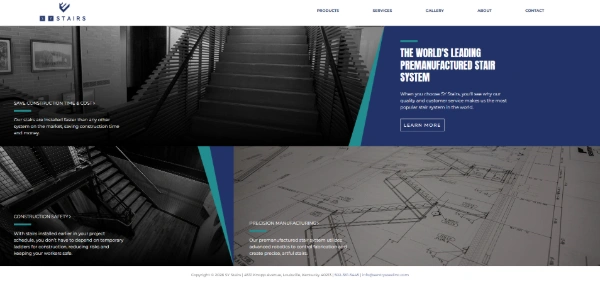
source : SY Stairs Official Website(https://systairs.com/)
- A fully modular design with integrated handrails eliminates the need for on-site welding or specialized labor. Compared to traditional field-assembled systems, installation is over 70%* faster, allowing follow-on trades to start work much sooner.
- Designed to meet building codes across the Ohio Valley, these stairs are ready for permanent use from day one. By eliminating the need for temporary ladders, they improve job site safety and accessibility.
| Key standards |
OSHA, AISC, AWS, etc. |
|---|---|
| Typical lead time |
6 to 8 weeks |
| CAD data | Available |
For
Decorative
Monumental Stairs
Decorative
Monumental Stairs
American Stair
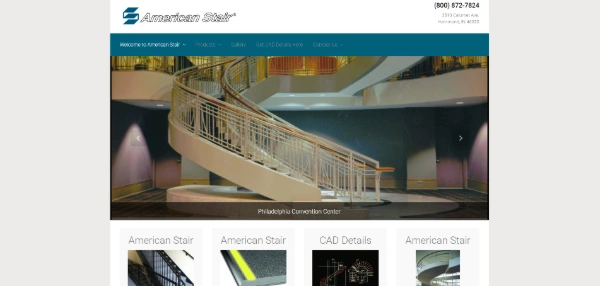
American Stair Official Website
(https://www.americanstair.com/)
- With proprietary custom design, the company delivers complex circular, spiral, and cantilevered stairs, creating iconic staircases that become a building’s architectural focal point.
- Advanced monumental stair solutions combine steel structures with materials such as glass, wood, and stone to deliver a refined, high-end finish with lasting strength.
| Key standards |
IBC, OSHA, etc. |
|---|---|
| Typical lead time |
8 to 12 weeks |
| CAD data | Available |
For
Industrial
Dock Stairs
Industrial
Dock Stairs
Upside Innovations

Upside Innovations Official
Website(https://upsideinnovations.com/)
- Crafted from industrial-grade aluminum, these stairs resist rust even in humid loading areas and outdoor installations. That helps maintain a clean appearance and dependable structural strength for long-lasting safety.
- Bolt-on assembly means your stair can be installed in just a few hours with a forklift and a small crew, keeping your jobsite moving with minimal disruption.
| Standards | OSHA,ADA, etc. |
|---|---|
| Lead time | Contact for details |
| CAD data | Contact for details |
*Based on SY Stairs' internal comparison between its modular pre-fabricated system and traditional field-assembled (stick-built) steel stair systems.
Results may vary depending on project scale, site conditions, and crew size.
Results may vary depending on project scale, site conditions, and crew size.
*Information as of February 2, 2026