
Top Steel Stair Manufacturers & Fabricators in the Ohio Valley » Commercial Steel Staircases » Exterior Metal Stairs for Commercial Buildings: Code, Durability, and Design
Exterior Metal Stairs for Commercial Buildings: Code, Durability, and Design
Exterior metal stairs serve as vital access points and emergency egress routes for commercial buildings. Designing these structures requires careful consideration of environmental factors, building codes, and material durability. This guide covers essential aspects of commercial exterior stairs, focusing on compliance, safety, and longevity.
The Unique Challenges of Commercial Exterior Stairs
Unlike indoor staircases, commercial exterior stairs face severe environmental exposure. Two major challenges must be addressed during the design and material selection process.
First, constant exposure to rain, snow, and ice significantly increases the risk of rust and structural deterioration over time. Second, outdoor conditions elevate the risk of slip-and-fall accidents among the general public, which can lead to liability concerns for property owners. Choosing appropriate materials and specifications is critical to mitigating these risks effectively.
Crucial IBC Codes for Commercial Exterior Stairs
Compliance with the International Building Code (IBC) is a strict requirement for commercial facilities. When dealing with exterior environments, certain IBC regulations require special attention to ensure long-term public safety.
Water Drainage and Slip-Resistant Treads
The IBC mandates that exterior stair treads prevent the accumulation of water, snow, and ice. To meet these requirements and ensure user safety, solid treads are generally avoided in outdoor settings.
Instead, materials such as perforated metal or bar grating are highly recommended. These designs allow moisture to pass through efficiently, maintaining a slip-resistant walking surface even during harsh weather conditions.
Weather-Resistant Handrails and Guardrails
Handrails and guardrails are critical safety components that are also vulnerable to weather-induced damage. Rust and corrosion can weaken these structures, potentially causing them to fail when relied upon.
The IBC requires handrails to withstand specific structural loads, such as a 200-pound concentrated load applied in any direction. Maintaining this structural integrity in an outdoor environment requires effective weatherproofing and regular inspections.
Best Metal Finishes to Prevent Rust and Corrosion
The lifespan of exterior metal stairs heavily depends on the quality of their surface finish. Applying the appropriate coating is essential for preventing corrosion and reducing long-term maintenance costs.
Hot-Dip Galvanized Steel: The Industry Standard
Hot-dip galvanizing involves coating the steel in molten zinc, creating a highly durable barrier against rust. While the initial investment might be higher than standard paint, it prevents corrosion for decades.
Because of its exceptional longevity and low maintenance requirements, hot-dip galvanized steel is widely recognized as a highly cost-effective and standard solution for commercial exterior stairs.
Powder Coating for Aesthetic Appeal
When the visual design of the building exterior is a priority, powder coating offers an excellent alternative. This finish allows the stair system to match the building's facade through a wide variety of color options.
However, it is important to note that powder-coated exterior stairs require periodic maintenance and touch-ups to ensure the coating remains intact and continues to protect the underlying metal from rust.
Prefabricated vs. Custom Exterior Metal Stairs
When planning a commercial project, buyers generally choose between prefabricated and custom stair systems.
Prefabricated metal stairs offer significant advantages in terms of construction schedules. They eliminate the need for on-site welding, reducing labor time and ensuring consistent quality. Conversely, custom-built stairs are suitable for projects that involve complex architectural layouts or require unique design elements that standard systems cannot easily accommodate.
Request a Quote from Top Steel Stair Manufacturers
Choosing a manufacturer capable of delivering durable, IBC-compliant exterior stairs is essential for the success of your project.
Our website introduces reputable metal stair fabricators equipped to meet the demands of commercial outdoor applications. We invite you to explore these options and find a partner suited to your specific requirements.
[Advertisement]
Find the Right Manufacturer by Stair Type
Find the Right Manufacturer by Stair Type
Compare manufacturers for egress, decorative, and industrial stair applications in the Ohio Valley.
Advertiser Disclosure:
We receive compensation from some of the companies listed below.This compensation may affect which companies are included and the order in which they appear.
For
Emergency
Egress Stairs
Emergency
Egress Stairs
SY Stairs
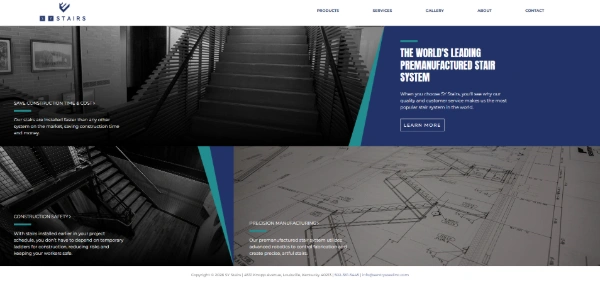
source : SY Stairs Official Website(https://systairs.com/)
- A fully modular design with integrated handrails eliminates the need for on-site welding or specialized labor. Compared to traditional field-assembled systems, installation is over 70%* faster, allowing follow-on trades to start work much sooner.
- Designed to meet building codes across the Ohio Valley, these stairs are ready for permanent use from day one. By eliminating the need for temporary ladders, they improve job site safety and accessibility.
| Key standards |
OSHA, AISC, AWS, etc. |
|---|---|
| Typical lead time |
6 to 8 weeks |
| CAD data | Available |
For
Decorative
Monumental Stairs
Decorative
Monumental Stairs
American Stair
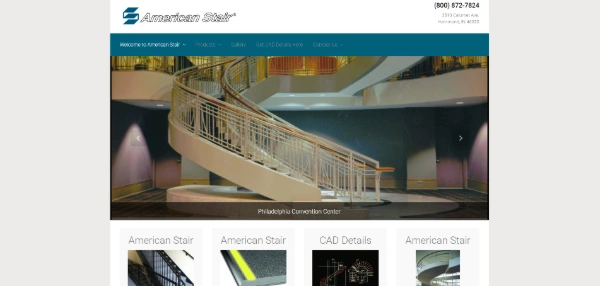
American Stair Official Website
(https://www.americanstair.com/)
- With proprietary custom design, the company delivers complex circular, spiral, and cantilevered stairs, creating iconic staircases that become a building’s architectural focal point.
- Advanced monumental stair solutions combine steel structures with materials such as glass, wood, and stone to deliver a refined, high-end finish with lasting strength.
| Key standards |
IBC, OSHA, etc. |
|---|---|
| Typical lead time |
8 to 12 weeks |
| CAD data | Available |
For
Industrial
Dock Stairs
Industrial
Dock Stairs
Upside Innovations
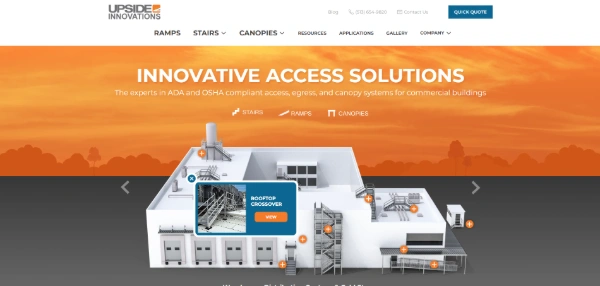
Upside Innovations Official
Website(https://upsideinnovations.com/)
- Crafted from industrial-grade aluminum, these stairs resist rust even in humid loading areas and outdoor installations. That helps maintain a clean appearance and dependable structural strength for long-lasting safety.
- Bolt-on assembly means your stair can be installed in just a few hours with a forklift and a small crew, keeping your jobsite moving with minimal disruption.
| Standards | OSHA,ADA, etc. |
|---|---|
| Lead time | Contact for details |
| CAD data | Contact for details |
*Based on SY Stairs' internal comparison between its modular pre-fabricated system and traditional field-assembled (stick-built) steel stair systems.
Results may vary depending on project scale, site conditions, and crew size.
Results may vary depending on project scale, site conditions, and crew size.
*Information as of February 2, 2026