
Top Steel Stair Manufacturers & Fabricators in the Ohio Valley » Steel Stair Safety & Compliance Standards » OSHA Compliant Steel Stairs: The Ultimate Guide for Industrial Safety
OSHA Compliant Steel Stairs: The Ultimate Guide for Industrial Safety
Index
OSHA compliant steel stairs are a critical component of workplace safety in factories, warehouses, manufacturing plants, and other industrial facilities throughout the United States. Designed to meet Occupational Safety and Health Administration (OSHA) regulations, these stairs help reduce fall hazards, improve accessibility, and support compliance with federal workplace safety requirements.
Whether you are constructing a new facility, upgrading aging infrastructure, or addressing inspection concerns, understanding OSHA stair requirements is essential. This guide explains the key standards, design considerations, and purchasing factors that facility managers, engineers, safety officers, and project owners should know when selecting OSHA compliant steel stairs.
Why OSHA Compliance is Critical for Your Facility
OSHA compliance is not simply a recommendation—it is a legal obligation for most industrial workplaces. Failure to meet OSHA stair regulations can expose businesses to workplace accidents, costly citations, project delays, and potential legal liability.
Falls continue to be one of the leading causes of serious workplace injuries in industrial environments. OSHA-compliant stairs are specifically designed to minimize these risks by providing safe, stable access between elevated work areas, equipment platforms, mezzanines, rooftops, and loading docks.
Beyond worker protection, maintaining OSHA compliance helps organizations avoid regulatory penalties and demonstrates a commitment to workplace safety. A properly designed stair system can contribute to successful inspections, lower insurance risks, and improved operational reliability across the facility.
Key OSHA Requirements for Steel Stairs (Standard 1910.25)
OSHA Standard 1910.25 establishes specific requirements for stairways used in general industry environments. These regulations address dimensions, handrails, load capacity, and overall stair safety to ensure workers can move safely throughout a facility.
While project-specific requirements may vary depending on the application, the following standards represent some of the most important OSHA stair design considerations.
Stair Width and Angle Specifications
OSHA requires standard stairs to provide sufficient space for safe movement while maintaining a comfortable climbing angle. Stairways that are too steep can increase the likelihood of slips and falls, while excessively narrow stairs may create bottlenecks during daily operations.
- Minimum stair width: 22 inches (559 mm)
- Stair angle: Between 30° and 50° from horizontal
- Clear access should be maintained throughout the stair system
- Landings should be provided where required by design and safety considerations
Maintaining proper stair geometry is essential for both user comfort and OSHA compliance. Deviations from approved dimensions can create safety hazards and may result in inspection deficiencies.
Tread and Riser Dimensions
The relationship between tread depth and riser height directly affects how safely employees can use a stairway. OSHA establishes dimensional requirements intended to reduce tripping hazards and create a consistent walking pattern.
- Minimum tread depth: 9.5 inches
- Maximum riser height: 9.5 inches
- Treads and risers must remain uniform throughout the stair flight
- Variations between steps should be minimized to prevent missteps
One of the most important OSHA requirements is dimensional consistency. Every step should feel identical to the user. Even small differences between riser heights or tread depths can increase the risk of trips and falls.
Handrail and Guardrail Requirements
Handrails and guardrails play a vital role in preventing falls from elevated surfaces. OSHA requires stair systems to include appropriate fall protection depending on stair width, height, and surrounding conditions.
- Handrails are generally required on stairways with four or more risers
- Handrail height typically ranges between 30 and 38 inches above the leading edge of stair treads
- Guardrails are required where fall hazards exist
- Handrails and guardrails must be capable of withstanding at least 200 pounds of force applied in a downward or outward direction
When selecting industrial stair systems, manufacturers should provide documentation verifying that their rail systems meet applicable OSHA load requirements. This helps simplify inspection processes and supports long-term workplace safety.
Benefits of Choosing Prefabricated OSHA Steel Stairs
Many facility owners choose prefabricated OSHA compliant steel stairs rather than building stair systems entirely in the field. Prefabricated systems are manufactured under controlled factory conditions and delivered ready for assembly.
This approach offers several advantages.
- Consistent manufacturing quality
- Reduced installation time
- Improved dimensional accuracy
- Lower labor requirements on-site
- Simplified compliance verification
- Reduced project downtime
Because prefabricated systems are produced using standardized engineering processes, they often provide a more reliable path to OSHA compliance than field-fabricated alternatives. This can be particularly valuable for facilities operating under tight schedules or strict safety requirements.
Custom vs. Standard OSHA Compliant Stairs
When selecting a stair solution, facility owners must determine whether a standard product or a custom-engineered system is the better fit.
Standard OSHA compliant stairs are typically suitable for common applications where dimensions and access requirements fall within typical design parameters. They often provide shorter lead times and lower upfront costs.
Custom stair systems become necessary when projects involve unique site constraints, unusual elevations, equipment clearances, or architectural requirements.
- Limited installation space
- Existing equipment interference
- Multi-level platform connections
- Special loading requirements
- Unique access routes
- Complex industrial layouts
A custom-designed OSHA stair system allows facilities to maintain compliance while adapting to real-world site conditions. This flexibility is often critical in retrofit projects and highly specialized industrial environments.
How to Choose the Right Steel Stair Manufacturer
Selecting the right manufacturer is just as important as choosing the correct stair design. A knowledgeable supplier can help ensure compliance, reduce project risk, and streamline installation.
When evaluating manufacturers, consider the following criteria:
- Demonstrated understanding of OSHA regulations
- Experience with industrial stair applications
- Engineering and CAD drawing support
- Custom design capabilities
- Reliable production and delivery schedules
- Documented quality control procedures
- Installation guidance and technical support
Manufacturers that specialize in OSHA compliant steel stairs often provide pre-engineered systems that already satisfy major regulatory requirements. This can significantly reduce the time required for design reviews and compliance verification.
Additionally, companies capable of supporting both standard and custom stair projects can provide greater flexibility as facility needs evolve over time.
Frequently Asked Questions (FAQs)
What is the difference between OSHA and IBC stair requirements?
OSHA primarily regulates workplace safety in industrial environments, while the International Building Code (IBC) governs building design and construction requirements. Depending on the project, both standards may apply simultaneously.
Do outdoor steel stairs require special corrosion protection?
Yes. Outdoor industrial stairs are commonly protected using hot-dip galvanizing, powder coating, aluminum construction, or other corrosion-resistant finishes. The best solution depends on environmental exposure and maintenance expectations.
Can prefabricated steel stairs meet OSHA requirements?
Yes. Many prefabricated stair systems are specifically engineered to comply with OSHA regulations and can simplify both installation and compliance documentation.
When are handrails required on industrial stairs?
OSHA generally requires handrails on stairways with four or more risers. Additional guardrail requirements may apply depending on fall hazards and stair configuration.
How can I verify that a stair system is OSHA compliant?
Request engineering documentation, product specifications, and compliance information from the manufacturer. Reputable suppliers can typically provide detailed information regarding applicable OSHA requirements.
Get a Quote for Your OSHA Compliant Steel Stairs Today
Choosing the right OSHA compliant steel stair system can improve worker safety, support regulatory compliance, and reduce long-term operational risks. Whether you need a standard industrial stair, rooftop access system, loading dock stair, or fully customized solution, working with an experienced manufacturer is the most effective way to achieve a successful outcome.
By partnering with a supplier that understands OSHA requirements, provides engineering support, and delivers reliable manufacturing quality, you can move forward with confidence and ensure your facility remains safe and compliant for years to come.
[Advertisement]
Find the Right Manufacturer by Stair Type
Find the Right Manufacturer by Stair Type
Compare manufacturers for egress, decorative, and industrial stair applications in the Ohio Valley.
Advertiser Disclosure:
We receive compensation from some of the companies listed below.This compensation may affect which companies are included and the order in which they appear.
For
Emergency
Egress Stairs
Emergency
Egress Stairs
SY Stairs
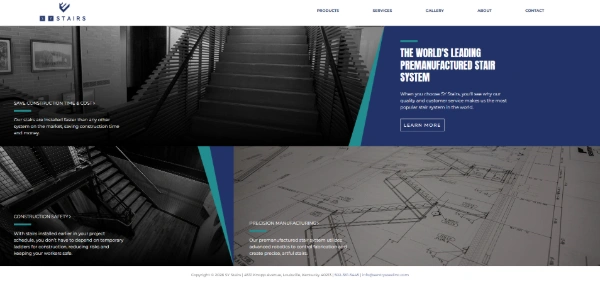
source : SY Stairs Official Website(https://systairs.com/)
- A fully modular design with integrated handrails eliminates the need for on-site welding or specialized labor. Compared to traditional field-assembled systems, installation is over 70%* faster, allowing follow-on trades to start work much sooner.
- Designed to meet building codes across the Ohio Valley, these stairs are ready for permanent use from day one. By eliminating the need for temporary ladders, they improve job site safety and accessibility.
| Key standards |
OSHA, AISC, AWS, etc. |
|---|---|
| Typical lead time |
6 to 8 weeks |
| CAD data | Available |
For
Decorative
Monumental Stairs
Decorative
Monumental Stairs
American Stair
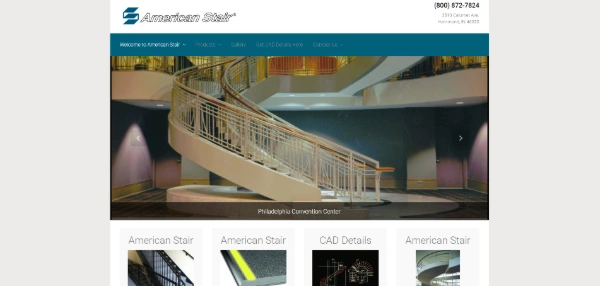
American Stair Official Website
(https://www.americanstair.com/)
- With proprietary custom design, the company delivers complex circular, spiral, and cantilevered stairs, creating iconic staircases that become a building’s architectural focal point.
- Advanced monumental stair solutions combine steel structures with materials such as glass, wood, and stone to deliver a refined, high-end finish with lasting strength.
| Key standards |
IBC, OSHA, etc. |
|---|---|
| Typical lead time |
8 to 12 weeks |
| CAD data | Available |
For
Industrial
Dock Stairs
Industrial
Dock Stairs
Upside Innovations

Upside Innovations Official
Website(https://upsideinnovations.com/)
- Crafted from industrial-grade aluminum, these stairs resist rust even in humid loading areas and outdoor installations. That helps maintain a clean appearance and dependable structural strength for long-lasting safety.
- Bolt-on assembly means your stair can be installed in just a few hours with a forklift and a small crew, keeping your jobsite moving with minimal disruption.
| Standards | OSHA,ADA, etc. |
|---|---|
| Lead time | Contact for details |
| CAD data | Contact for details |
*Based on SY Stairs' internal comparison between its modular pre-fabricated system and traditional field-assembled (stick-built) steel stair systems.
Results may vary depending on project scale, site conditions, and crew size.
Results may vary depending on project scale, site conditions, and crew size.
*Information as of February 2, 2026