
Top Steel Stair Manufacturers & Fabricators in the Ohio Valley » Steel Stair Safety & Compliance Standards » OSHA Stair Tread Requirements: Dimensions, Rules, and Slip-Resistant Surfaces
OSHA Stair Tread Requirements: Dimensions, Rules, and Slip-Resistant Surfaces
Index
Stair treads are one of the most important safety elements of any industrial stair system. While handrails, guardrails, and structural strength often receive significant attention, the surface employees step on every day plays a critical role in preventing slips, trips, and falls.
OSHA stair tread requirements are designed to create consistent, predictable, and slip-resistant walking surfaces that protect workers in factories, warehouses, processing plants, distribution centers, and other industrial environments. Understanding these requirements can help facility owners improve workplace safety while reducing compliance risks.
Why Strict OSHA Tread Compliance Prevents Workplace Injuries
Slips, trips, and falls remain among the most common causes of workplace injuries across industrial facilities. Stairs present a particularly high-risk environment because workers must continuously transition between different elevations while often carrying tools, equipment, or materials.
Even minor defects in tread dimensions or surface conditions can increase the likelihood of accidents. Uneven step depths, worn surfaces, standing water, oil contamination, or inadequate traction can all contribute to serious injuries.
OSHA's stair tread requirements are intended to minimize these hazards by creating uniform walking surfaces that employees can navigate safely and confidently.
Proper tread design not only helps protect workers from injury, but also reduces the risk of costly citations, workers' compensation claims, operational disruptions, and potential litigation.
For facility managers and safety professionals, ensuring compliance with OSHA tread standards should be considered a fundamental part of any workplace safety program.
Core OSHA Tread Dimensions (Standard 1910.25)
OSHA Standard 1910.25 establishes dimensional requirements that help ensure safe stairway performance in general industry applications.
The following requirements are among the most important considerations when evaluating industrial stair treads:
- Minimum tread depth: 9.5 inches
- Maximum riser height: 9.5 inches
- Uniform dimensions throughout the stair flight
- Slip-resistant walking surfaces
- Proper nosing design where applicable
These standards are intended to create a consistent walking pattern that reduces the risk of missteps and unexpected footing changes.
Minimum Tread Depth
OSHA requires stair treads to provide a minimum tread depth of 9.5 inches (approximately 24 cm).
This measurement represents the horizontal walking surface available for foot placement on each step. Adequate tread depth helps workers maintain balance while ascending or descending the stairway.
Treads that are too shallow can force users to place only part of their foot on the step, increasing the likelihood of slips and falls.
When designing steel stairs for industrial environments, manufacturers typically engineer tread systems that comfortably exceed the minimum requirement while maintaining efficient use of available space.
The Crucial Rule of Dimensional Uniformity
One of the most frequently overlooked OSHA requirements involves dimensional consistency throughout the stair flight.
OSHA requires that variations in tread depth and riser height remain extremely limited. Within a stairway, the difference between the largest and smallest tread or riser dimension generally cannot exceed 0.375 inches (3/8 inch).
| Requirement | Maximum Variation Allowed |
|---|---|
| Tread Depth | 0.375 inches |
| Riser Height | 0.375 inches |
This requirement exists because workers naturally develop a rhythm when using stairs. Unexpected changes in step dimensions can disrupt that rhythm and significantly increase the chance of tripping.
Even a well-built stairway can become non-compliant if individual steps vary beyond OSHA tolerances.
This is one reason why improvised field fabrication and unverified welding modifications often create compliance concerns. Factory-manufactured stair systems generally provide better dimensional consistency than site-built alternatives.
Stair Nosing Requirements Explained
The stair nosing is the front edge of each tread where users first make contact while descending the stairway.
Because this area experiences the greatest amount of wear and foot traffic, OSHA places particular emphasis on maintaining safe walking conditions.
In general, stair nosings should provide adequate slip resistance and remain free from damage that could create tripping hazards.
For open-riser stair systems, additional considerations may apply regarding tread projection and opening dimensions. Excessive overhangs can create unexpected footing conditions and may interfere with safe movement.
Many industrial stair manufacturers incorporate textured nosings, abrasive safety surfaces, or specialized anti-slip designs to improve traction in demanding work environments.
A properly designed nosing can significantly improve worker confidence and reduce slip-related incidents, particularly in wet or contaminated environments.
Best Steel Stair Tread Surfaces for Industrial Environments
While OSHA requires stair surfaces to be slip resistant, the regulation does not mandate a specific tread material. This allows facility owners to choose a solution that best matches their operating environment.
The following tread types are among the most common options for OSHA-compliant steel stair systems.
Diamond Plate
Diamond plate treads are one of the most widely used industrial stair surfaces. Their raised pattern improves traction while providing excellent durability.
These treads perform well in general industrial environments and are often selected because they balance cost, strength, and ease of maintenance.
For many indoor manufacturing facilities, diamond plate remains a practical and economical solution.
Bar Grating
Bar grating treads feature an open design that allows liquids, debris, snow, and other contaminants to pass through the walking surface.
This makes them particularly effective in outdoor environments, wastewater facilities, food processing plants, chemical facilities, and loading dock applications.
Because contaminants do not accumulate on the tread surface, bar grating can help maintain traction under challenging conditions.
Facilities exposed to rain, oil, grease, or process liquids often benefit significantly from bar grating stair treads.
Perforated / Grip Strut
Perforated treads and grip strut products are designed specifically for maximum slip resistance.
These systems use punched openings and aggressive traction surfaces that provide excellent grip even when workers are wearing heavy industrial footwear.
Many safety professionals consider grip strut products to offer some of the highest slip-resistance performance available for industrial stair systems.
For facilities where worker safety is the highest priority, perforated and grip strut treads often represent the most effective anti-slip solution.
Replacing Non-Compliant Treads vs. Installing New OSHA Stairs
When an existing stairway fails to meet OSHA requirements, facility owners typically face two potential solutions: upgrading the tread system or replacing the entire stairway.
In some situations, replacing only the tread surface may be sufficient.
- Existing stair dimensions already meet OSHA requirements
- Structural components remain in good condition
- Only traction or surface wear is the primary concern
- Slip-resistant covers can be added successfully
However, tread replacement alone may not solve deeper compliance issues.
If the stairway contains inconsistent riser heights, inadequate tread depths, damaged structural members, or outdated configurations, a complete replacement may be the safer and more cost-effective solution.
Modern prefabricated OSHA-compliant steel stairs are engineered to satisfy current standards while providing improved durability and installation efficiency.
In many older facilities, installing a new prefabricated steel stair system can eliminate multiple compliance concerns at once and reduce long-term maintenance costs.
Upgrade to Safe, OSHA-Compliant Steel Stairs Today
Ensuring that your stair treads meet OSHA requirements is one of the most effective ways to improve workplace safety and reduce regulatory risk. Whether you need upgraded tread surfaces, replacement stair components, or an entirely new industrial stair system, selecting the right solution can help protect employees and support long-term compliance.
Experienced steel stair manufacturers can evaluate your existing stairways, identify potential compliance concerns, and recommend solutions tailored to your facility's operating environment.
From diamond plate and bar grating treads to fully engineered OSHA-compliant stair systems, investing in the right equipment today can help prevent accidents and costly corrections tomorrow.
[Advertisement]
Find the Right Manufacturer by Stair Type
Find the Right Manufacturer by Stair Type
Compare manufacturers for egress, decorative, and industrial stair applications in the Ohio Valley.
Advertiser Disclosure:
We receive compensation from some of the companies listed below.This compensation may affect which companies are included and the order in which they appear.
For
Emergency
Egress Stairs
Emergency
Egress Stairs
SY Stairs
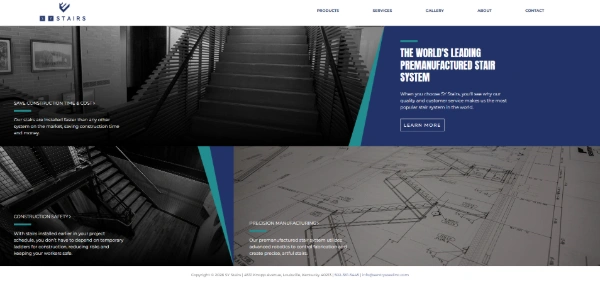
source : SY Stairs Official Website(https://systairs.com/)
- A fully modular design with integrated handrails eliminates the need for on-site welding or specialized labor. Compared to traditional field-assembled systems, installation is over 70%* faster, allowing follow-on trades to start work much sooner.
- Designed to meet building codes across the Ohio Valley, these stairs are ready for permanent use from day one. By eliminating the need for temporary ladders, they improve job site safety and accessibility.
| Key standards |
OSHA, AISC, AWS, etc. |
|---|---|
| Typical lead time |
6 to 8 weeks |
| CAD data | Available |
For
Decorative
Monumental Stairs
Decorative
Monumental Stairs
American Stair
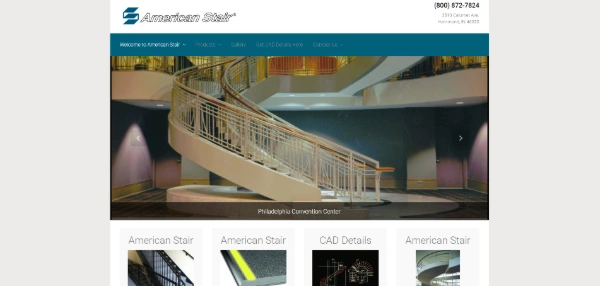
American Stair Official Website
(https://www.americanstair.com/)
- With proprietary custom design, the company delivers complex circular, spiral, and cantilevered stairs, creating iconic staircases that become a building’s architectural focal point.
- Advanced monumental stair solutions combine steel structures with materials such as glass, wood, and stone to deliver a refined, high-end finish with lasting strength.
| Key standards |
IBC, OSHA, etc. |
|---|---|
| Typical lead time |
8 to 12 weeks |
| CAD data | Available |
For
Industrial
Dock Stairs
Industrial
Dock Stairs
Upside Innovations

Upside Innovations Official
Website(https://upsideinnovations.com/)
- Crafted from industrial-grade aluminum, these stairs resist rust even in humid loading areas and outdoor installations. That helps maintain a clean appearance and dependable structural strength for long-lasting safety.
- Bolt-on assembly means your stair can be installed in just a few hours with a forklift and a small crew, keeping your jobsite moving with minimal disruption.
| Standards | OSHA,ADA, etc. |
|---|---|
| Lead time | Contact for details |
| CAD data | Contact for details |
*Based on SY Stairs' internal comparison between its modular pre-fabricated system and traditional field-assembled (stick-built) steel stair systems.
Results may vary depending on project scale, site conditions, and crew size.
Results may vary depending on project scale, site conditions, and crew size.
*Information as of February 2, 2026